432 Hz wind chime for sound healing and mindful living - turns an ordinary breeze into a small, daily invitation to pause.
Handcrafted in Queensland, Australia
Tuned to G Major
Listen to Sonora Flow
What is 432 Hz, and why do people care?
Most music today is tuned to a standard of 440 Hz (most of our wind chimes are tuned to this frequency). This is a convention formalised internationally in the mid-twentieth century. The 432 Hz movement is a growing community of sound practitioners and mindfulness seekers who prefer tuning down just slightly, to 432 Hz (vibrations per second).
Proponents describe 432 Hz as feeling more grounded - warmer, rounder, less clinical than the standard. Others point to relationships between 432 Hz and mathematical patterns found in nature. Many people genuinely describe feeling more relaxed or centred when listening to music at this frequency.
What is well-established is the broader story: sound affects our nervous system, certain tones can lower heart rate and cortisol, and deliberate listening is a genuine mindfulness practice. Whether 432 Hz specifically is the key, or whether the ritual of mindful sound itself does the work, is a conversation still unfolding.
Wind chimes as a sound healing tool
Wind chimes occupy a unique space among sound instruments. Unlike a singing bowl which you must actively strike, or a music playlist you must consciously put on, our wind chimes are responsive and alive. They play themselves, animated by the same breeze that moves through the trees and across your skin. This quality makes them particularly suited to mindfulness practice. You can't force a wind chime to sound, you can only create the conditions and wait!
Hung in your garden, on a deck, or near an open window, a tuned wind chime can become an anchor point for attention throughout the day. Each gentle chime becomes a small invitation to pause, breathe, and return to the present moment. In this way, even a single note carried on the wind can function as a bell of mindfulness.
The key word, though, is tuned. A carefully tuned, hand made Windsong chime crafted to play specific musical intervals that resolve harmoniously, has a very different quality to a mass produced chime. The difference between noise and music is our intention, and our tuned chimes carry that intention in every note. See our customer reviews below.
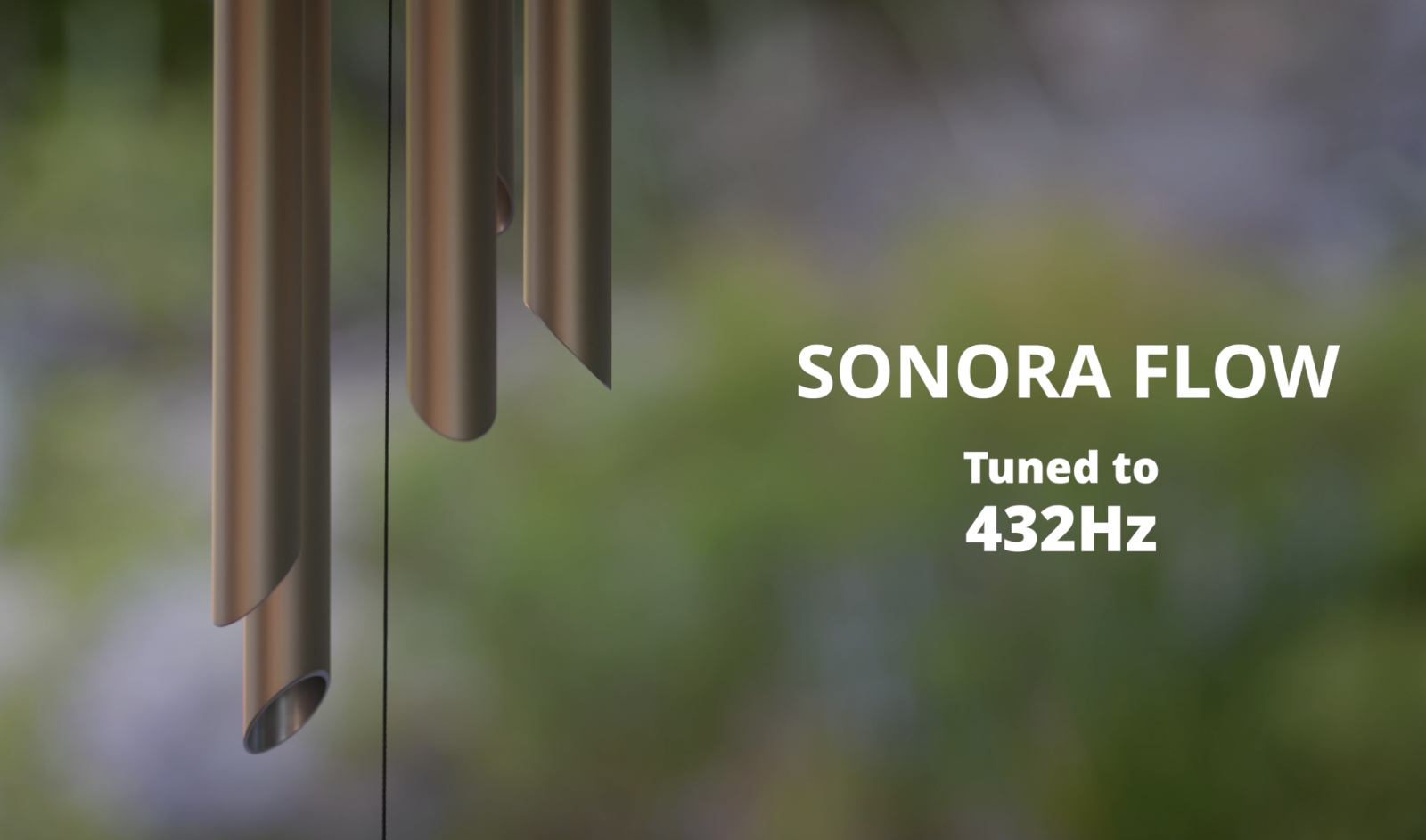
Sonora Flow: Tuned to 432 Hz in G Major
Handcrafted in Queensland, Australia, our Sonora Flow wind chime is tuned to 432 Hz and plays notes in a G Major scale — specifically B, D, F#, G, and B across five fluted aluminium pipes. G Major is a key long associated with warmth and openness, and the pentatonic-leaning selection of notes means the chime is forgiving: whatever order the wind plays them in, they simply work together.
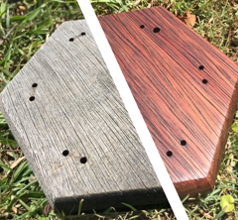
The hanging length gives the pipes room to move freely, producing rich, full tones that carry beautifully outdoors. The anodised aluminium pipes are 80% recycled, and the timber components — blue gum hardwood tops, camphor laurel wind sails — are sourced from the Australian wilderness, which means every chime is genuinely unique.
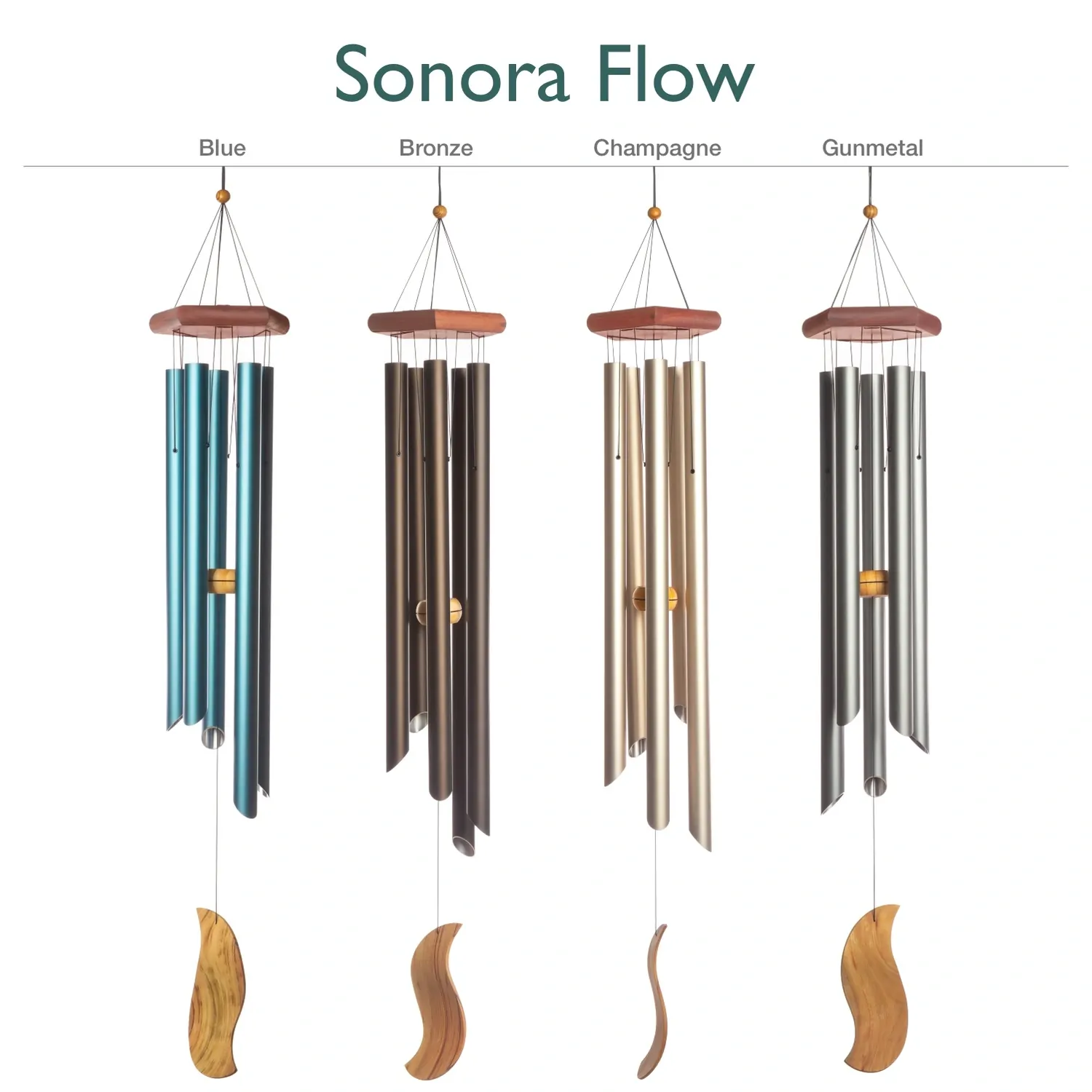
Sonora Flow is available in four colours - Blue, Bronze, Champagne, and Gunmetal.
How to use it mindfully
If you're bringing a 432 Hz wind chime into your life as a wellness tool, here are a few gentle ways to work with it:
As a meditation bell. Each time the chime sounds, use it as a cue to take one conscious breath. You don't need a formal sitting practice, this works just as well while you're reading, gardening, or making tea.
As a transitional marker. Hung near a door or on a path you walk often, the sound becomes a threshold, a reminder to arrive fully in the space you're entering.
As background atmosphere. During a restorative yoga session, breathwork, or simply a quiet afternoon, let the chime provide an unpredictable, natural soundscape. Unlike recorded music, it will never quite repeat itself.
One last thing
Sound healing is a broad and fascinating field, and 432 Hz is one frequency within it that has captured the imagination of many. We won't promise you that hanging this chime will transform your health. What we can say is this: beautiful, intentional sound is genuinely good for the soul.
The act of pausing to listen - really listen - is a form of mindfulness in itself. And a wind chime tuned to play harmoniously, that responds to the living breath of the wind, is a rather lovely companion for that practice.
Welcome to our website. If you continue to browse and use this website, you are agreeing to comply with and be bound by the following terms and conditions of use, which together with our privacy policy govern Windsong Chimes’s relationship with you in relation to this website. If you disagree with any part of these terms and conditions, please do not use our website.
The term ‘Windsong Chimes’ or ‘us’ or ‘we’ refers to the owner of the website whose registered office is 1/27 Lysaght St, Coolum Beach, Qld 4573. Our ABN is 43 633 238 972. The term ‘you’ refers to the user or viewer of our website.
The use of this website is subject to the following terms of use:
The content of the pages of this website is for your general information and use only. It is subject to change without notice.
Neither we nor any third parties provide any warranty or guarantee as to the accuracy, timeliness, performance, completeness or suitability of the information and materials found or offered on this website for any particular purpose. You acknowledge that such information and materials may contain inaccuracies or errors and we expressly exclude liability for any such inaccuracies or errors to the fullest extent permitted by law.
Your use of any information or materials on this website is entirely at your own risk, for which we shall not be liable. It shall be your own responsibility to ensure that any products, services or information available through this website meet your specific requirements.
This website contains material which is owned by or licensed to us. This material includes, but is not limited to, the design, layout, look, appearance and graphics. Reproduction is prohibited other than in accordance with the copyright notice, which forms part of these terms and conditions.
All trademarks reproduced in this website, which are not the property of, or licensed to the operator, are acknowledged on the website.
Unauthorised use of this website may give rise to a claim for damages and/or be a criminal offence.
From time to time, this website may also include links to other websites. These links are provided for your convenience to provide further information. They do not signify that we endorse the website(s). We have no responsibility for the content of the linked website(s).
Your use of this website and any dispute arising out of such use of the website is subject to the laws of Australia.